146 lines
5.6 KiB
Markdown
146 lines
5.6 KiB
Markdown
---
|
|
comments: true
|
|
---
|
|
|
|
# Detect and Annotate
|
|
|
|
Supervision offers a streamlined solution to effortlessly annotate predictions from a
|
|
range of object detection and segmentation models. This guide demonstrates how to
|
|
execute inference using the YOLOv8 model with either the
|
|
[Inference](https://github.com/roboflow/inference) or
|
|
[Ultralytics](https://github.com/ultralytics/ultralytics) packages. Following this,
|
|
you'll learn how to import these predictions into Supervision for image annotation
|
|
purposes.
|
|
|
|
## Run Inference
|
|
|
|
First, you'll need to obtain predictions from your object detection or segmentation model.
|
|
|
|
=== "Ultralytics"
|
|
|
|
```python
|
|
import cv2
|
|
from ultralytics import YOLO
|
|
|
|
model = YOLO("yolov8n.pt")
|
|
image = cv2.imread(<PATH TO IMAGE>)
|
|
results = model(image)[0]
|
|
```
|
|
|
|
=== "Inference"
|
|
|
|
```python
|
|
import cv2
|
|
from inference.models.utils import get_roboflow_model
|
|
|
|
model = get_roboflow_model(model_id="yolov8n-640", api_key=<ROBOFLOW API KEY>)
|
|
image = cv2.imread(<PATH TO IMAGE>)
|
|
results = model.infer(image)[0]
|
|
```
|
|
|
|
## Load Predictions into Supervision
|
|
|
|
Now that we have predictions from a model, we can load them into Supervision.
|
|
|
|
=== "Ultralytics"
|
|
|
|
We can do so using the [`sv.Detections.from_ultralytics`](detection/core/#supervision.detection.core.Detections.from_ultralytics) method, which accepts model results from both detection and segmentation models.
|
|
|
|
```python
|
|
import cv2
|
|
import supervision as sv
|
|
from ultralytics import YOLO
|
|
|
|
model = YOLO("yolov8n.pt")
|
|
image = cv2.imread(<PATH TO IMAGE>)
|
|
results = model(image)[0]
|
|
detections = sv.Detections.from_ultralytics(results)
|
|
```
|
|
|
|
=== "Inference"
|
|
|
|
We can do so using the [`sv.Detections.from_inference`](detection/core/#supervision.detection.core.Detections.from_inference) method, which accepts model results from both detection and segmentation models.
|
|
|
|
```python
|
|
import cv2
|
|
import supervision as sv
|
|
from inference.models.utils import get_roboflow_model
|
|
|
|
model = get_roboflow_model(model_id="yolov8n-640", api_key=<ROBOFLOW API KEY>
|
|
image = cv2.imread(<PATH TO IMAGE>)
|
|
results = model.infer(image)[0]
|
|
detections = sv.Detections.from_inference(results)
|
|
```
|
|
|
|
You can conveniently load predictions from other computer vision frameworks and libraries using:
|
|
|
|
- [`from_deepsparse`](detection/core/#supervision.detection.core.Detections.from_deepsparse) ([Deepsparse](https://github.com/neuralmagic/deepsparse))
|
|
- [`from_detectron2`](detection/core/#supervision.detection.core.Detections.from_detectron2) ([Detectron2](https://github.com/facebookresearch/detectron2))
|
|
- [`from_mmdetection`](detection/core/#supervision.detection.core.Detections.from_mmdetection) ([MMDetection](https://github.com/open-mmlab/mmdetection))
|
|
- [`from_inference`](detection/core/#supervision.detection.core.Detections.from_inference) ([Roboflow Inference](https://github.com/roboflow/inference))
|
|
- [`from_sam`](detection/core/#supervision.detection.core.Detections.from_sam) ([Segment Anything Model](https://github.com/facebookresearch/segment-anything))
|
|
- [`from_transformers`](detection/core/#supervision.detection.core.Detections.from_transformers) ([HuggingFace Transformers](https://github.com/huggingface/transformers))
|
|
- [`from_yolo_nas`](detection/core/#supervision.detection.core.Detections.from_yolo_nas) ([YOLO-NAS](https://github.com/Deci-AI/super-gradients/blob/master/YOLONAS.md))
|
|
|
|
## Annotate Image
|
|
|
|
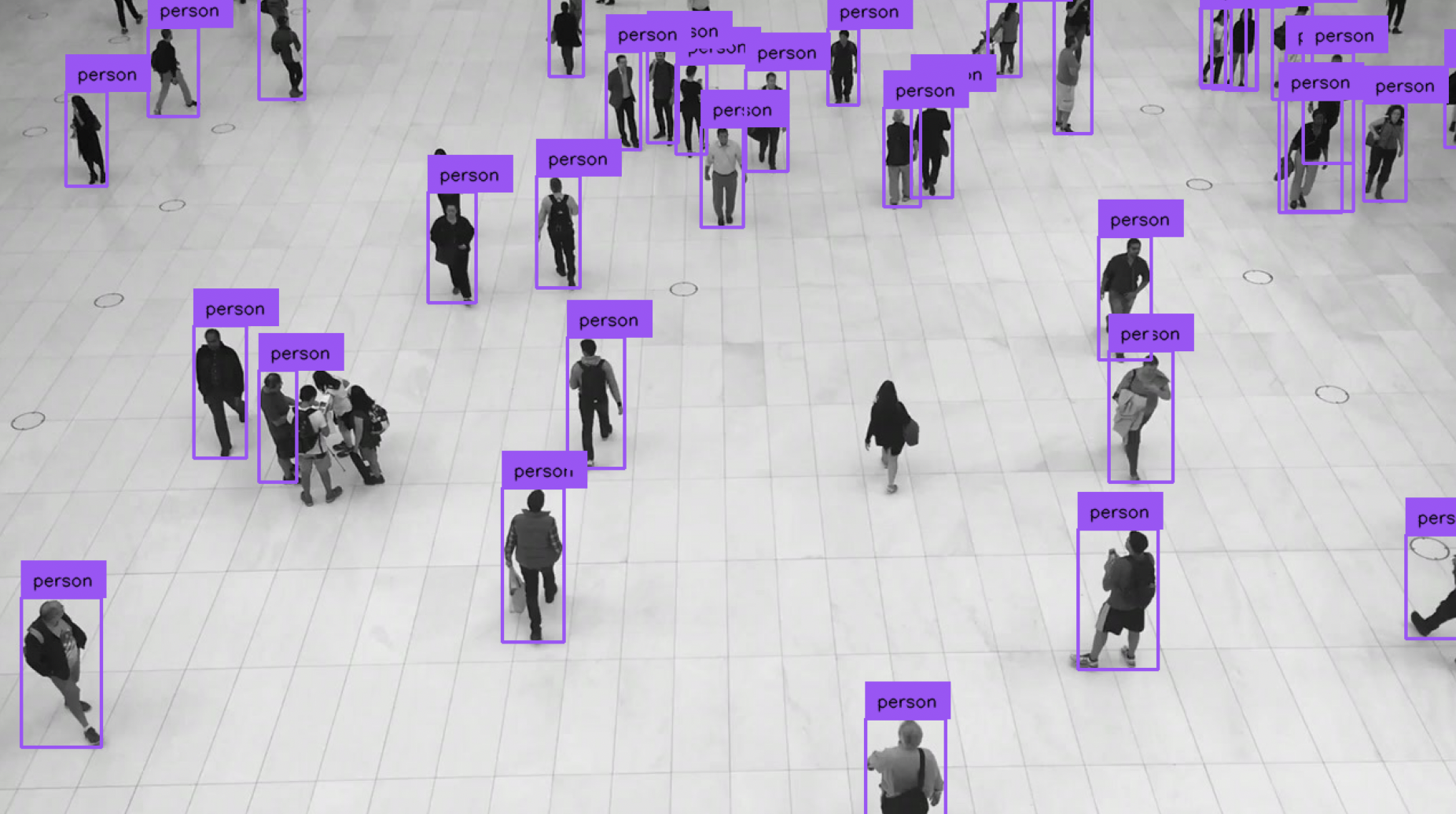
Finally, we can annotate the image with the predictions. Since we are working with an object detection model, we will use the [`sv.BoundingBoxAnnotator`](annotators/#supervision.annotators.core.BoundingBoxAnnotator) and [`sv.LabelAnnotator`](annotators/#supervision.annotators.core.LabelAnnotator) classes. If you are running the segmentation model [`sv.MaskAnnotator`](annotators/#supervision.annotators.core.MaskAnnotator) is a drop-in replacement for [`sv.BoundingBoxAnnotator`](annotators/#supervision.annotators.core.BoundingBoxAnnotator) that will allow you to draw masks instead of boxes.
|
|
|
|
=== "Ultralytics"
|
|
|
|
```python
|
|
import cv2
|
|
import supervision as sv
|
|
from ultralytics import YOLO
|
|
|
|
model = YOLO("yolov8n.pt")
|
|
image = cv2.imread(<PATH TO IMAGE>)
|
|
results = model(image)[0]
|
|
detections = sv.Detections.from_ultralytics(results)
|
|
|
|
bounding_box_annotator = sv.BoundingBoxAnnotator()
|
|
label_annotator = sv.LabelAnnotator()
|
|
|
|
labels = [
|
|
model.model.names[class_id]
|
|
for class_id
|
|
in detections.class_id
|
|
]
|
|
|
|
annotated_image = bounding_box_annotator.annotate(
|
|
scene=image, detections=detections)
|
|
annotated_image = label_annotator.annotate(
|
|
scene=annotated_image, detections=detections, labels=labels)
|
|
```
|
|
|
|
=== "Inference"
|
|
|
|
```python
|
|
import cv2
|
|
import supervision as sv
|
|
from inference.models.utils import get_roboflow_model
|
|
|
|
model = get_roboflow_model(model_id="yolov8n-640", api_key=<ROBOFLOW API KEY>
|
|
image = cv2.imread(<PATH TO IMAGE>)
|
|
results = model.infer(image)[0]
|
|
detections = sv.Detections.from_inference(results)
|
|
|
|
bounding_box_annotator = sv.BoundingBoxAnnotator()
|
|
label_annotator = sv.LabelAnnotator()
|
|
|
|
annotated_image = bounding_box_annotator.annotate(
|
|
scene=image, detections=detections)
|
|
annotated_image = label_annotator.annotate(
|
|
scene=annotated_image, detections=detections)
|
|
```
|
|
|
|
|
|
|
|
## Display Annotated Image
|
|
|
|
To display the annotated image in Jupyter Notebook or Google Colab, use the [`sv.plot_image`](utils/notebook/#supervision.utils.notebook.plot_image) function.
|
|
|
|
```python
|
|
sv.plot_image(annotated_image)
|
|
```
|