diff --git a/.pre-commit-config.yaml b/.pre-commit-config.yaml
index 2e0b0ede..2853b370 100644
--- a/.pre-commit-config.yaml
+++ b/.pre-commit-config.yaml
@@ -65,12 +65,12 @@ repos:
- repo: https://github.com/psf/black
- rev: 23.9.1
+ rev: 23.10.0
hooks:
- id: black
- repo: https://github.com/astral-sh/ruff-pre-commit
- rev: v0.0.292
+ rev: v0.1.1
hooks:
- id: ruff
args: [--fix, --exit-non-zero-on-fix]
diff --git a/README.md b/README.md
index ffb88e98..78d8fbf0 100644
--- a/README.md
+++ b/README.md
@@ -364,5 +364,4 @@ We love your input! Please see our [contributing guide](https://github.com/robof
-
diff --git a/demo.ipynb b/demo.ipynb
index 11abb584..9c06b62c 100644
--- a/demo.ipynb
+++ b/demo.ipynb
@@ -226,7 +226,7 @@
"output_type": "stream",
"text": [
"\u001b[?25l \u001b[90m━━━━━━━━━━━━━━━━━━━━━━━━━━━━━━━━━━━━━━━━\u001b[0m \u001b[32m0.0/45.4 kB\u001b[0m \u001b[31m?\u001b[0m eta \u001b[36m-:--:--\u001b[0m\r\u001b[2K \u001b[90m━━━━━━━━━━━━━━━━━━━━━━━━━━━━━━━━━━━━━━━━\u001b[0m \u001b[32m45.4/45.4 kB\u001b[0m \u001b[31m3.4 MB/s\u001b[0m eta \u001b[36m0:00:00\u001b[0m\n",
- "\u001b[?25h0.15.0\n"
+ "\u001b[?25h0.16.0\n"
]
}
],
@@ -540,7 +540,7 @@
}
],
"source": [
- "mask_annotator = sv.MaskAnnotator(color_map=\"index\")\n",
+ "mask_annotator = sv.MaskAnnotator(color_lookup=sv.ColorLookup.INDEX)\n",
"\n",
"annotated_image = mask_annotator.annotate(image.copy(), detections=detections)\n",
"\n",
diff --git a/docs/annotators.md b/docs/annotators.md
index 9709d7c8..efb77d11 100644
--- a/docs/annotators.md
+++ b/docs/annotators.md
@@ -82,6 +82,27 @@
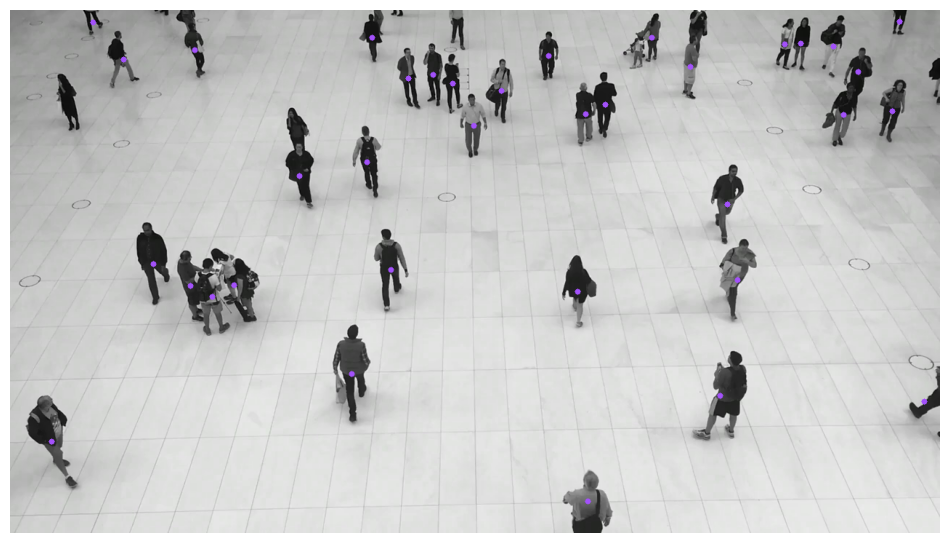
+=== "Dot"
+
+ ```python
+ >>> import supervision as sv
+
+ >>> image = ...
+ >>> detections = sv.Detections(...)
+
+ >>> dot_annotator = sv.DotAnnotator()
+ >>> annotated_frame = dot_annotator.annotate(
+ ... scene=image.copy(),
+ ... detections=detections
+ ... )
+ ```
+
+
+
+ { align=center width="800" }
+
+
+
=== "Ellipse"
```python
@@ -191,15 +212,25 @@
```python
>>> import supervision as sv
+ >>> from ultralytics import YOLO
- >>> image = ...
- >>> detections = sv.Detections(...)
+ >>> model = YOLO('yolov8x.pt')
>>> trace_annotator = sv.TraceAnnotator()
- >>> annotated_frame = trace_annotator.annotate(
- ... scene=image.copy(),
- ... detections=detections
- ... )
+
+ >>> video_info = sv.VideoInfo.from_video_path(video_path='...')
+ >>> frames_generator = get_video_frames_generator(source_path='...')
+ >>> tracker = sv.ByteTrack()
+
+ >>> with sv.VideoSink(target_path='...', video_info=video_info) as sink:
+ ... for frame in frames_generator:
+ ... result = model(frame)[0]
+ ... detections = sv.Detections.from_ultralytics(result)
+ ... detections = tracker.update_with_detections(detections)
+ ... annotated_frame = trace_annotator.annotate(
+ ... scene=frame.copy(),
+ ... detections=detections)
+ ... sink.write_frame(frame=annotated_frame)
```
@@ -208,6 +239,35 @@
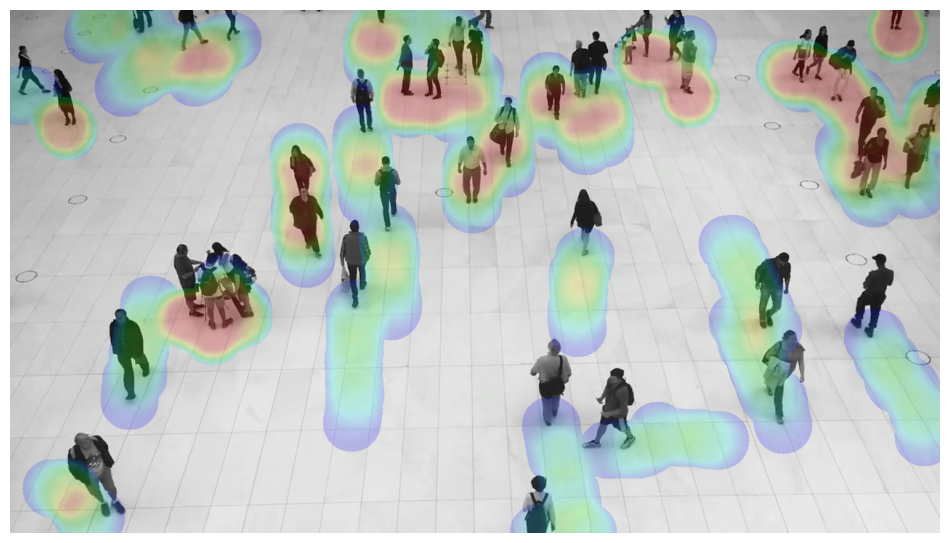
+=== "HeatMap"
+
+ ```python
+ >>> import supervision as sv
+ >>> from ultralytics import YOLO
+
+ >>> model = YOLO('yolov8x.pt')
+
+ >>> heat_map_annotator = sv.HeatMapAnnotator()
+
+ >>> video_info = sv.VideoInfo.from_video_path(video_path='...')
+ >>> frames_generator = get_video_frames_generator(source_path='...')
+
+ >>> with sv.VideoSink(target_path='...', video_info=video_info) as sink:
+ ... for frame in frames_generator:
+ ... result = model(frame)[0]
+ ... detections = sv.Detections.from_ultralytics(result)
+ ... annotated_frame = heat_map_annotator.annotate(
+ ... scene=frame.copy(),
+ ... detections=detections)
+ ... sink.write_frame(frame=annotated_frame)
+ ```
+
+
+
+ { align=center width="800" }
+
+
+
## BoundingBoxAnnotator
:::supervision.annotators.core.BoundingBoxAnnotator
@@ -224,6 +284,10 @@
:::supervision.annotators.core.CircleAnnotator
+## DotAnnotator
+
+:::supervision.annotators.core.DotAnnotator
+
## EllipseAnnotator
:::supervision.annotators.core.EllipseAnnotator
@@ -232,6 +296,10 @@
:::supervision.annotators.core.HaloAnnotator
+## HeatMapAnnotator
+
+:::supervision.annotators.core.HeatMapAnnotator
+
## MaskAnnotator
:::supervision.annotators.core.MaskAnnotator
@@ -247,3 +315,7 @@
## TraceAnnotator
:::supervision.annotators.core.TraceAnnotator
+
+## ColorLookup
+
+:::supervision.annotators.utils.ColorLookup
diff --git a/docs/changelog.md b/docs/changelog.md
index 5c303b86..1039bb07 100644
--- a/docs/changelog.md
+++ b/docs/changelog.md
@@ -1,3 +1,47 @@
+### 0.16.0 October 19, 2023
+
+- Added [#422](https://github.com/roboflow/supervision/pull/422): [`sv.BoxMaskAnnotator`](https://supervision.roboflow.com/annotators/#supervision.annotators.core.BoxMaskAnnotator) allowing to annotate images and videos with mox masks.
+
+- Added [#433](https://github.com/roboflow/supervision/pull/433): [`sv.HaloAnnotator`](https://supervision.roboflow.com/annotators/#supervision.annotators.core.HaloAnnotator) allowing to annotate images and videos with halo effect.
+
+```python
+>>> import supervision as sv
+
+>>> image = ...
+>>> detections = sv.Detections(...)
+
+>>> halo_annotator = sv.HaloAnnotator()
+>>> annotated_frame = halo_annotator.annotate(
+... scene=image.copy(),
+... detections=detections
+... )
+```
+
+- Added [#466](https://github.com/roboflow/supervision/pull/466): [`sv.HeatMapAnnotator`](https://supervision.roboflow.com/annotators/#supervision.annotators.core.HeatMapAnnotator) allowing to annotate videos with heat maps.
+
+- Added [#492](https://github.com/roboflow/supervision/pull/492): [`sv.DotAnnotator`](https://supervision.roboflow.com/annotators/#supervision.annotators.core.DotAnnotator) allowing to annotate images and videos with dots.
+
+- Added [#449](https://github.com/roboflow/supervision/pull/449): [`sv.draw_image`](https://supervision.roboflow.com/draw/utils/#supervision.draw.utils.draw_image) allowing to draw an image onto a given scene with specified opacity and dimensions.
+
+- Added [#280](https://github.com/roboflow/supervision/pull/280): [`sv.FPSMonitor`](https://supervision.roboflow.com/utils/video/#supervision.utils.video.FPSMonitor) for monitoring frames per second (FPS) to benchmark latency.
+
+- Added [#454](https://github.com/roboflow/supervision/pull/454): 🤗 Hugging Face Annotators [space](https://huggingface.co/spaces/Roboflow/Annotators).
+
+- Changed [#482](https://github.com/roboflow/supervision/pull/482): [`sv.LineZone.tigger`](https://supervision.roboflow.com/detection/tools/line_zone/#supervision.detection.line_counter.LineZone.trigger) now return `Tuple[np.ndarray, np.ndarray]`. The first array indicates which detections have crossed the line from outside to inside. The second array indicates which detections have crossed the line from inside to outside.
+
+- Changed [#465](https://github.com/roboflow/supervision/pull/465): Annotator argument name from `color_map: str` to `color_lookup: ColorLookup` enum to increase type safety.
+
+- Changed [#426](https://github.com/roboflow/supervision/pull/426): [`sv.MaskAnnotator`](https://supervision.roboflow.com/annotators/#supervision.annotators.core.MaskAnnotator) allowing 2x faster annotation.
+
+- Fixed [#477](https://github.com/roboflow/supervision/pull/477): Poetry env definition allowing proper local installation.
+
+- Fixed [#430](https://github.com/roboflow/supervision/pull/430): [`sv.ByteTrack`](https://supervision.roboflow.com/trackers/#supervision.tracker.byte_tracker.core.ByteTrack) to return `np.array([], dtype=int)` when `svDetections` is empty.
+
+!!! warning
+
+ `sv.Detections.from_yolov8` and `sv.Classifications.from_yolov8` as those are now replaced by [`sv.Detections.from_ultralytics`](https://supervision.roboflow.com/detection/core/#supervision.detection.core.Detections.from_ultralytics) and [`sv.Classifications.from_ultralytics`](https://supervision.roboflow.com/classification/core/#supervision.classification.core.Classifications.from_ultralytics).
+
+
### 0.15.0 October 5, 2023
- Added [#170](https://github.com/roboflow/supervision/pull/170): [`sv.BoundingBoxAnnotator`](https://supervision.roboflow.com/annotators/#supervision.annotators.core.BoundingBoxAnnotator) allowing to annotate images and videos with bounding boxes.
diff --git a/docs/detection/tools/line_zone.md b/docs/detection/tools/line_zone.md
new file mode 100644
index 00000000..cbecdaa9
--- /dev/null
+++ b/docs/detection/tools/line_zone.md
@@ -0,0 +1,3 @@
+## LineZone
+
+:::supervision.detection.line_counter.LineZone
diff --git a/docs/draw/color.md b/docs/draw/color.md
new file mode 100644
index 00000000..5114f4ba
--- /dev/null
+++ b/docs/draw/color.md
@@ -0,0 +1,7 @@
+## Color
+
+:::supervision.draw.color.Color
+
+## ColorPalette
+
+:::supervision.draw.color.ColorPalette
diff --git a/docs/draw/utils.md b/docs/draw/utils.md
index e7bb806b..5832089e 100644
--- a/docs/draw/utils.md
+++ b/docs/draw/utils.md
@@ -17,3 +17,7 @@
## draw_text
:::supervision.draw.utils.draw_text
+
+## draw_image
+
+:::supervision.draw.utils.draw_image
diff --git a/docs/how_to/detect_and_annotate.md b/docs/how_to/detect_and_annotate.md
index c9497945..04250bc3 100644
--- a/docs/how_to/detect_and_annotate.md
+++ b/docs/how_to/detect_and_annotate.md
@@ -1 +1,78 @@
-🚧 Page under construction.
+With Supervision, you can easily [annotate](https://supervision.roboflow.com/annotators/) predictions obtained from a variety of object detection and segmentation models. This document outlines how to run inference using the [Ultralytics](https://github.com/ultralytics/ultralytics) YOLOv8 model, load these predictions into Supervision, and annotate the image.
+
+## Run Inference
+
+First, you'll need to obtain predictions from your object detection or segmentation model.
+```python
+import cv2
+from ultralytics import YOLO
+
+model = YOLO("yolov8n.pt")
+image = cv2.imread("image.jpg")
+results = model(image)[0]
+```
+
+## Load Predictions into Supervision
+
+Now that we have predictions from a model, we can load them into Supervision. We can do so using the [`sv.Detections.from_ultralytics`](https://supervision.roboflow.com/detection/core/#supervision.detection.core.Detections.from_ultralytics) method, which accepts model results from both detection and segmentation models.
+
+```python
+import cv2
+from ultralytics import YOLO
+import supervision as sv
+
+model = YOLO("yolov8n.pt")
+image = cv2.imread("image.jpg")
+results = model(image)[0]
+detections = sv.Detections.from_ultralytics(results)
+```
+
+You can conveniently load predictions from other computer vision frameworks and libraries using:
+
+- [`from_deepsparse`](https://supervision.roboflow.com/detection/core/#supervision.detection.core.Detections.from_deepsparse) ([Deepsparse](https://github.com/neuralmagic/deepsparse))
+- [`from_detectron2`](https://supervision.roboflow.com/detection/core/#supervision.detection.core.Detections.from_detectron2) ([Detectron2](https://github.com/facebookresearch/detectron2))
+- [`from_mmdetection`](https://supervision.roboflow.com/detection/core/#supervision.detection.core.Detections.from_mmdetection) ([MMDetection](https://github.com/open-mmlab/mmdetection))
+- [`from_roboflow`](https://supervision.roboflow.com/detection/core/#supervision.detection.core.Detections.from_roboflow) ([Roboflow Inference](https://github.com/roboflow/inference))
+- [`from_sam`](https://supervision.roboflow.com/detection/core/#supervision.detection.core.Detections.from_sam) ([Segment Anything Model](https://github.com/facebookresearch/segment-anything))
+- [`from_transformers`](https://supervision.roboflow.com/detection/core/#supervision.detection.core.Detections.from_transformers) ([HuggingFace Transformers](https://github.com/huggingface/transformers))
+- [`from_yolo_nas`](https://supervision.roboflow.com/detection/core/#supervision.detection.core.Detections.from_yolo_nas) ([YOLO-NAS](https://github.com/Deci-AI/super-gradients/blob/master/YOLONAS.md))
+
+
+## Annotate Image
+
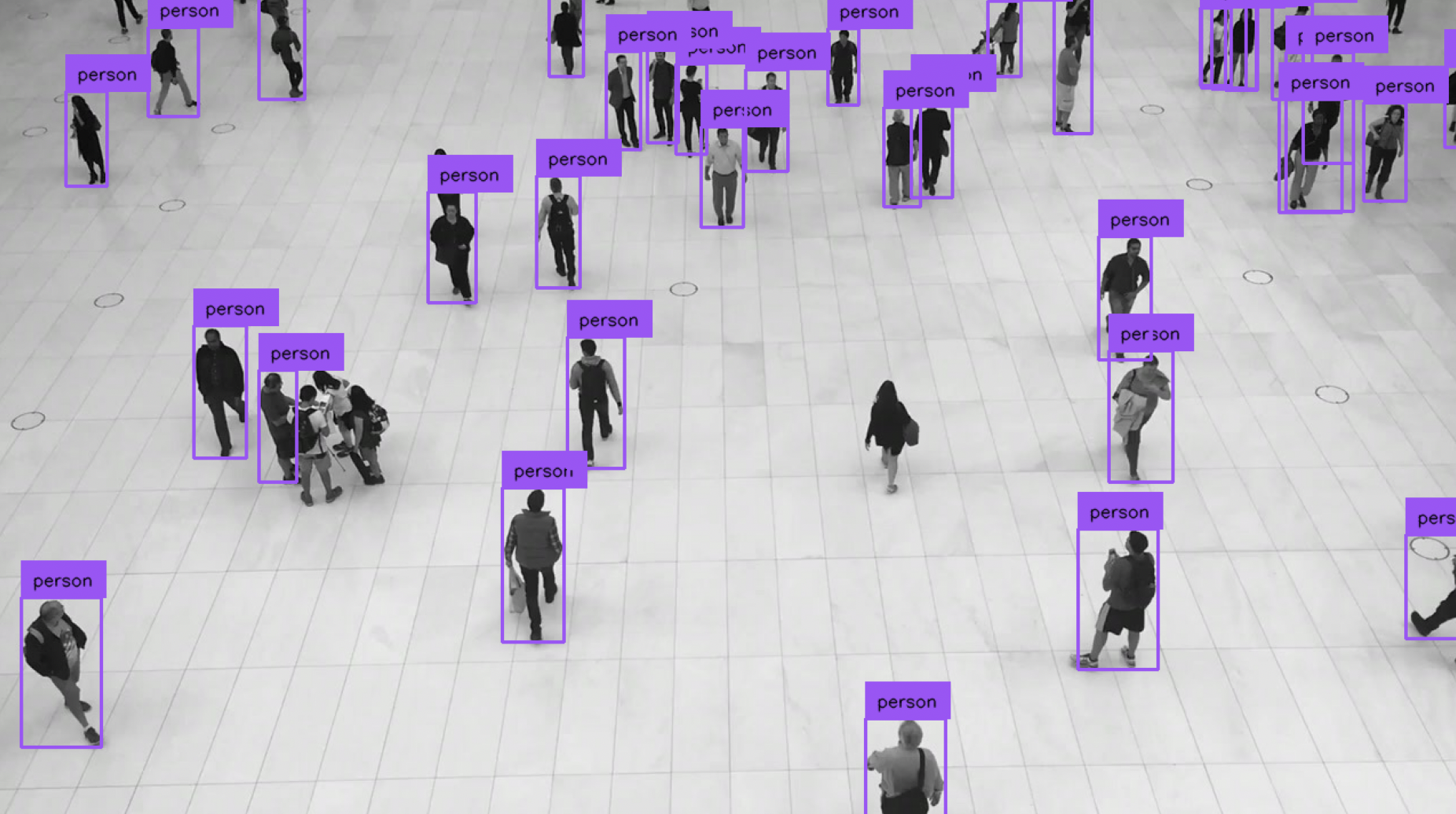
+Finally, we can annotate the image with the predictions. Since we are working with an object detection model, we will use the [`sv.BoundingBoxAnnotator`](https://supervision.roboflow.com/annotators/#supervision.annotators.core.BoundingBoxAnnotator) and [`sv.LabelAnnotator`](https://supervision.roboflow.com/annotators/#supervision.annotators.core.LabelAnnotator) classes. If you are running the segmentation model [`sv.MaskAnnotator`](https://supervision.roboflow.com/annotators/#supervision.annotators.core.MaskAnnotator) is a drop-in replacement for [`sv.BoundingBoxAnnotator`](https://supervision.roboflow.com/annotators/#supervision.annotators.core.BoundingBoxAnnotator) that will allow you to draw masks instead of boxes.
+
+```python
+import cv2
+from ultralytics import YOLO
+import supervision as sv
+
+model = YOLO("yolov8n.pt")
+image = cv2.imread("image.jpg")
+results = model(image)[0]
+detections = sv.Detections.from_ultralytics(results)
+
+bounding_box_annotator = sv.BoundingBoxAnnotator()
+label_annotator = sv.LabelAnnotator()
+
+labels = [
+ results.names[class_id]
+ for class_id
+ in detections.class_id
+]
+
+annotated_image = bounding_box_annotator.annotate(
+ scene=image, detections=detections)
+annotated_image = label_annotator.annotate(
+ scene=annotated_image, detections=detections, labels=labels)
+```
+
+
+
+## Display Annotated Image
+
+To display the annotated image in Jupyter Notebook or Google Colab, use the [`sv.plot_image`](https://supervision.roboflow.com/utils/notebook/#supervision.utils.notebook.plot_image) function.
+
+```python
+sv.plot_image(annotated_image)
+```
diff --git a/docs/index.md b/docs/index.md
index 3019901f..ae3a425a 100644
--- a/docs/index.md
+++ b/docs/index.md
@@ -63,7 +63,7 @@ You can install `supervision` with pip in a
cd supervision
# setup python environment and activate it
- poetry env use python 3.10
+ poetry env use python3.10
poetry shell
# headless install
diff --git a/mkdocs.yml b/mkdocs.yml
index 7d5b0b5e..6ac881d4 100644
--- a/mkdocs.yml
+++ b/mkdocs.yml
@@ -1,5 +1,5 @@
site_name: Supervision
-site_url: https://roboflow.github.io/supervision
+site_url: https://supervision.roboflow.com/
site_author: Roboflow
site_description: A set of easy-to-use utils that will come in handy in any Computer Vision project
repo_name: roboflow/supervision
@@ -39,6 +39,7 @@ nav:
- Core: detection/core.md
- Utils: detection/utils.md
- Tools:
+ - Line Zone: detection/tools/line_zone.md
- Polygon Zone: detection/tools/polygon_zone.md
- Inference Slicer: detection/tools/inference_slicer.md
- Annotators: annotators.md
@@ -47,6 +48,7 @@ nav:
- Metrics:
- Object Detection: metrics/detection.md
- Draw:
+ - Color: draw/color.md
- Utils: draw/utils.md
- Utils:
- Video: utils/video.md
diff --git a/poetry.lock b/poetry.lock
index 73270e69..95eb8665 100644
--- a/poetry.lock
+++ b/poetry.lock
@@ -3354,13 +3354,13 @@ dev = ["flake8", "flake8-annotations", "flake8-bandit", "flake8-bugbear", "flake
[[package]]
name = "urllib3"
-version = "2.0.6"
+version = "2.0.7"
description = "HTTP library with thread-safe connection pooling, file post, and more."
optional = false
python-versions = ">=3.7"
files = [
- {file = "urllib3-2.0.6-py3-none-any.whl", hash = "sha256:7a7c7003b000adf9e7ca2a377c9688bbc54ed41b985789ed576570342a375cd2"},
- {file = "urllib3-2.0.6.tar.gz", hash = "sha256:b19e1a85d206b56d7df1d5e683df4a7725252a964e3993648dd0fb5a1c157564"},
+ {file = "urllib3-2.0.7-py3-none-any.whl", hash = "sha256:fdb6d215c776278489906c2f8916e6e7d4f5a9b602ccbcfdf7f016fc8da0596e"},
+ {file = "urllib3-2.0.7.tar.gz", hash = "sha256:c97dfde1f7bd43a71c8d2a58e369e9b2bf692d1334ea9f9cae55add7d0dd0f84"},
]
[package.extras]
diff --git a/supervision/__init__.py b/supervision/__init__.py
index 31d01314..f4e70ead 100644
--- a/supervision/__init__.py
+++ b/supervision/__init__.py
@@ -12,8 +12,10 @@ from supervision.annotators.core import (
BoxCornerAnnotator,
BoxMaskAnnotator,
CircleAnnotator,
+ DotAnnotator,
EllipseAnnotator,
HaloAnnotator,
+ HeatMapAnnotator,
LabelAnnotator,
MaskAnnotator,
TraceAnnotator,
@@ -40,7 +42,14 @@ from supervision.detection.utils import (
polygon_to_xyxy,
)
from supervision.draw.color import Color, ColorPalette
-from supervision.draw.utils import draw_filled_rectangle, draw_polygon, draw_text
+from supervision.draw.utils import (
+ draw_filled_rectangle,
+ draw_image,
+ draw_line,
+ draw_polygon,
+ draw_rectangle,
+ draw_text,
+)
from supervision.geometry.core import Point, Position, Rect
from supervision.geometry.utils import get_polygon_center
from supervision.metrics.detection import ConfusionMatrix, MeanAveragePrecision
diff --git a/supervision/annotators/core.py b/supervision/annotators/core.py
index 8005f49b..3fbd7a85 100644
--- a/supervision/annotators/core.py
+++ b/supervision/annotators/core.py
@@ -602,6 +602,83 @@ class CircleAnnotator(BaseAnnotator):
return scene
+class DotAnnotator(BaseAnnotator):
+ """
+ A class for drawing dots on an image at specific coordinates based on provided
+ detections.
+ """
+
+ def __init__(
+ self,
+ color: Union[Color, ColorPalette] = ColorPalette.default(),
+ radius: int = 4,
+ position: Position = Position.CENTER,
+ color_lookup: ColorLookup = ColorLookup.CLASS,
+ ):
+ """
+ Args:
+ color (Union[Color, ColorPalette]): The color or color palette to use for
+ annotating detections.
+ radius (int): Radius of the drawn dots.
+ position (Position): The anchor position for placing the dot.
+ color_lookup (ColorLookup): Strategy for mapping colors to annotations.
+ Options are `INDEX`, `CLASS`, `TRACE`.
+ """
+ self.color: Union[Color, ColorPalette] = color
+ self.radius: int = radius
+ self.position: Position = position
+ self.color_lookup: ColorLookup = color_lookup
+
+ def annotate(
+ self,
+ scene: np.ndarray,
+ detections: Detections,
+ custom_color_lookup: Optional[np.ndarray] = None,
+ ) -> np.ndarray:
+ """
+ Annotates the given scene with dots based on the provided detections.
+
+ Args:
+ scene (np.ndarray): The image where dots will be drawn.
+ detections (Detections): Object detections to annotate.
+ custom_color_lookup (Optional[np.ndarray]): Custom color lookup array.
+ Allows to override the default color mapping strategy.
+
+ Returns:
+ np.ndarray: The annotated image.
+
+ Example:
+ ```python
+ >>> import supervision as sv
+
+ >>> image = ...
+ >>> detections = sv.Detections(...)
+
+ >>> dot_annotator = sv.DotAnnotator()
+ >>> annotated_frame = dot_annotator.annotate(
+ ... scene=image.copy(),
+ ... detections=detections
+ ... )
+ ```
+
+ 
+ """
+ xy = detections.get_anchor_coordinates(anchor=self.position)
+ for detection_idx in range(len(detections)):
+ color = resolve_color(
+ color=self.color,
+ detections=detections,
+ detection_idx=detection_idx,
+ color_lookup=self.color_lookup
+ if custom_color_lookup is None
+ else custom_color_lookup,
+ )
+ center = (int(xy[detection_idx, 0]), int(xy[detection_idx, 1]))
+ cv2.circle(scene, center, self.radius, color.as_bgr(), -1)
+ return scene
+
+
class LabelAnnotator:
"""
A class for annotating labels on an image using provided detections.
@@ -838,7 +915,7 @@ class TraceAnnotator:
def __init__(
self,
color: Union[Color, ColorPalette] = ColorPalette.default(),
- position: Optional[Position] = Position.CENTER,
+ position: Position = Position.CENTER,
trace_length: int = 30,
thickness: int = 2,
color_lookup: ColorLookup = ColorLookup.CLASS,
@@ -847,7 +924,7 @@ class TraceAnnotator:
Args:
color (Union[Color, ColorPalette]): The color to draw the trace, can be
a single color or a color palette.
- position (Optional[Position]): The position of the trace.
+ position (Position): The position of the trace.
Defaults to `CENTER`.
trace_length (int): The maximum length of the trace in terms of historical
points. Defaults to `30`.
@@ -883,15 +960,25 @@ class TraceAnnotator:
Example:
```python
>>> import supervision as sv
+ >>> from ultralytics import YOLO
- >>> image = ...
- >>> detections = sv.Detections(...)
+ >>> model = YOLO('yolov8x.pt')
>>> trace_annotator = sv.TraceAnnotator()
- >>> annotated_frame = trace_annotator.annotate(
- ... scene=image.copy(),
- ... detections=detections
- ... )
+
+ >>> video_info = sv.VideoInfo.from_video_path(video_path='...')
+ >>> frames_generator = sv.get_video_frames_generator(source_path='...')
+ >>> tracker = sv.ByteTrack()
+
+ >>> with sv.VideoSink(target_path='...', video_info=video_info) as sink:
+ ... for frame in frames_generator:
+ ... result = model(frame)[0]
+ ... detections = sv.Detections.from_ultralytics(result)
+ ... detections = tracker.update_with_detections(detections)
+ ... annotated_frame = trace_annotator.annotate(
+ ... scene=frame.copy(),
+ ... detections=detections)
+ ... sink.write_frame(frame=annotated_frame)
```

return scene
+
+
+class HeatMapAnnotator:
+ """
+ A class for drawing heatmaps on an image based on provided detections.
+ Heat accumulates over time and is drawn as a semi-transparent overlay
+ of blurred circles.
+ """
+
+ def __init__(
+ self,
+ position: Position = Position.BOTTOM_CENTER,
+ opacity: float = 0.2,
+ radius: int = 40,
+ kernel_size: int = 25,
+ top_hue: int = 0,
+ low_hue: int = 125,
+ ):
+ """
+ Args:
+ position (Position): The position of the heatmap. Defaults to
+ `BOTTOM_CENTER`.
+ opacity (float): Opacity of the overlay mask, between 0 and 1.
+ radius (int): Radius of the heat circle.
+ kernel_size (int): Kernel size for blurring the heatmap.
+ top_hue (int): Hue at the top of the heatmap. Defaults to 0 (red).
+ low_hue (int): Hue at the bottom of the heatmap. Defaults to 125 (blue).
+ """
+ self.position = position
+ self.opacity = opacity
+ self.radius = radius
+ self.kernel_size = kernel_size
+ self.heat_mask = None
+ self.top_hue = top_hue
+ self.low_hue = low_hue
+
+ def annotate(self, scene: np.ndarray, detections: Detections) -> np.ndarray:
+ """
+ Annotates the scene with a heatmap based on the provided detections.
+
+ Args:
+ scene (np.ndarray): The image where the heatmap will be drawn.
+ detections (Detections): Object detections to annotate.
+
+ Returns:
+ np.ndarray: Annotated image.
+
+ Example:
+ ```python
+ >>> import supervision as sv
+ >>> from ultralytics import YOLO
+
+ >>> model = YOLO('yolov8x.pt')
+
+ >>> heat_map_annotator = sv.HeatMapAnnotator()
+
+ >>> video_info = sv.VideoInfo.from_video_path(video_path='...')
+ >>> frames_generator = get_video_frames_generator(source_path='...')
+
+ >>> with sv.VideoSink(target_path='...', video_info=video_info) as sink:
+ ... for frame in frames_generator:
+ ... result = model(frame)[0]
+ ... detections = sv.Detections.from_ultralytics(result)
+ ... annotated_frame = heat_map_annotator.annotate(
+ ... scene=frame.copy(),
+ ... detections=detections)
+ ... sink.write_frame(frame=annotated_frame)
+ ```
+
+ 
+ """
+
+ if self.heat_mask is None:
+ self.heat_mask = np.zeros(scene.shape[:2])
+ mask = np.zeros(scene.shape[:2])
+ for xy in detections.get_anchor_coordinates(self.position):
+ cv2.circle(mask, (int(xy[0]), int(xy[1])), self.radius, 1, -1)
+ self.heat_mask = mask + self.heat_mask
+ temp = self.heat_mask.copy()
+ temp = self.low_hue - temp / temp.max() * (self.low_hue - self.top_hue)
+ temp = temp.astype(np.uint8)
+ if self.kernel_size is not None:
+ temp = cv2.blur(temp, (self.kernel_size, self.kernel_size))
+ hsv = np.zeros(scene.shape)
+ hsv[..., 0] = temp
+ hsv[..., 1] = 255
+ hsv[..., 2] = 255
+ temp = cv2.cvtColor(hsv.astype(np.uint8), cv2.COLOR_HSV2BGR)
+ mask = cv2.cvtColor(self.heat_mask.astype(np.uint8), cv2.COLOR_GRAY2BGR) > 0
+ scene[mask] = cv2.addWeighted(temp, self.opacity, scene, 1 - self.opacity, 0)[
+ mask
+ ]
+ return scene
diff --git a/supervision/annotators/utils.py b/supervision/annotators/utils.py
index 6b6b9837..5b4e86cb 100644
--- a/supervision/annotators/utils.py
+++ b/supervision/annotators/utils.py
@@ -10,13 +10,22 @@ from supervision.geometry.core import Position
class ColorLookup(Enum):
"""
- Enum for annotator color lookup.
+ Enumeration class to define strategies for mapping colors to annotations.
+
+ This enum supports three different lookup strategies:
+ - `INDEX`: Colors are determined by the index of the detection within the scene.
+ - `CLASS`: Colors are determined by the class label of the detected object.
+ - `TRACK`: Colors are determined by the tracking identifier of the object.
"""
INDEX = "index"
CLASS = "class"
TRACK = "track"
+ @classmethod
+ def list(cls):
+ return list(map(lambda c: c.value, cls))
+
def resolve_color_idx(
detections: Detections,
diff --git a/supervision/detection/line_counter.py b/supervision/detection/line_counter.py
index ea97fcb8..851d1d4a 100644
--- a/supervision/detection/line_counter.py
+++ b/supervision/detection/line_counter.py
@@ -1,4 +1,4 @@
-from typing import Dict, Optional
+from typing import Dict, Optional, Tuple
import cv2
import numpy as np
@@ -10,37 +10,54 @@ from supervision.geometry.core import Point, Rect, Vector
class LineZone:
"""
- Count the number of objects that cross a line.
+ This class is responsible for counting the number of objects that cross a
+ predefined line.
+
+ !!! warning
+
+ LineZone utilizes the `tracker_id`. Read
+ [here](https://supervision.roboflow.com/trackers/) to learn how to plug
+ tracking into your inference pipeline.
+
+ Attributes:
+ in_count (int): The number of objects that have crossed the line from outside
+ to inside.
+ out_count (int): The number of objects that have crossed the line from inside
+ to outside.
"""
def __init__(self, start: Point, end: Point):
"""
- Initialize a LineCounter object.
-
- Attributes:
+ Args:
start (Point): The starting point of the line.
end (Point): The ending point of the line.
-
"""
self.vector = Vector(start=start, end=end)
self.tracker_state: Dict[str, bool] = {}
self.in_count: int = 0
self.out_count: int = 0
- def trigger(self, detections: Detections):
+ def trigger(self, detections: Detections) -> Tuple[np.ndarray, np.ndarray]:
"""
- Update the in_count and out_count for the detections that cross the line.
+ Update the `in_count` and `out_count` based on the objects that cross the line.
- Attributes:
- detections (Detections): The detections for which to update the counts.
+ Args:
+ detections (Detections): A list of detections for which to update the
+ counts.
+ Returns:
+ A tuple of two boolean NumPy arrays. The first array indicates which
+ detections have crossed the line from outside to inside. The second
+ array indicates which detections have crossed the line from inside to
+ outside.
"""
- for xyxy, _, confidence, class_id, tracker_id in detections:
- # handle detections with no tracker_id
+ crossed_in = np.full(len(detections), False)
+ crossed_out = np.full(len(detections), False)
+
+ for i, (xyxy, _, confidence, class_id, tracker_id) in enumerate(detections):
if tracker_id is None:
continue
- # we check if all four anchors of bbox are on the same side of vector
x1, y1, x2, y2 = xyxy
anchors = [
Point(x=x1, y=y1),
@@ -50,25 +67,27 @@ class LineZone:
]
triggers = [self.vector.is_in(point=anchor) for anchor in anchors]
- # detection is partially in and partially out
if len(set(triggers)) == 2:
continue
tracker_state = triggers[0]
- # handle new detection
+
if tracker_id not in self.tracker_state:
self.tracker_state[tracker_id] = tracker_state
continue
- # handle detection on the same side of the line
if self.tracker_state.get(tracker_id) == tracker_state:
continue
self.tracker_state[tracker_id] = tracker_state
if tracker_state:
self.in_count += 1
+ crossed_in[i] = True
else:
self.out_count += 1
+ crossed_out[i] = True
+
+ return crossed_in, crossed_out
class LineZoneAnnotator:
diff --git a/supervision/draw/color.py b/supervision/draw/color.py
index ed28e78b..69bcc9c5 100644
--- a/supervision/draw/color.py
+++ b/supervision/draw/color.py
@@ -34,21 +34,35 @@ def _validate_color_hex(color_hex: str):
@dataclass
class Color:
+ """
+ Represents a color in RGB format.
+
+ Attributes:
+ r (int): Red channel.
+ g (int): Green channel.
+ b (int): Blue channel.
+ """
+
r: int
g: int
b: int
@classmethod
- def from_hex(cls, color_hex: str):
+ def from_hex(cls, color_hex: str) -> Color:
"""
- Creates a Color instance from a color hex string
+ Create a Color instance from a hex string.
- :param color_hex: str : The color hex string in the format
- of "fff", "ffffff", "#fff", or "#ffffff"
- :return: Color : A Color instance representing the color
+ Args:
+ color_hex (str): Hex string of the color.
+
+ Returns:
+ Color: Instance representing the color.
Example:
- color = Color.from_hex('#ff00ff')
+ ```
+ >>> Color.from_hex('#ff00ff')
+ Color(r=255, g=0, b=255)
+ ```
"""
_validate_color_hex(color_hex)
color_hex = color_hex.lstrip("#")
@@ -59,17 +73,31 @@ class Color:
def as_rgb(self) -> Tuple[int, int, int]:
"""
- Returns the color as a tuple of integers in the RGB format
+ Returns the color as an RGB tuple.
- :return: Tuple[int, int, int] : The color in the RGB format
+ Returns:
+ Tuple[int, int, int]: RGB tuple.
+
+ Example:
+ ```
+ >>> color.as_rgb()
+ (255, 0, 255)
+ ```
"""
return self.r, self.g, self.b
def as_bgr(self) -> Tuple[int, int, int]:
"""
- Returns the color as a tuple of integers in the BGR format
+ Returns the color as a BGR tuple.
- :return: Tuple[int, int, int] : The color in the BGR format
+ Returns:
+ Tuple[int, int, int]: BGR tuple.
+
+ Example:
+ ```
+ >>> color.as_bgr()
+ (255, 0, 255)
+ ```
"""
return self.b, self.g, self.r
@@ -100,33 +128,55 @@ class ColorPalette:
@classmethod
def default(cls) -> ColorPalette:
+ """
+ Returns a default color palette.
+
+ Returns:
+ ColorPalette: A ColorPalette instance with default colors.
+
+ Example:
+ ```
+ >>> ColorPalette.default()
+ ColorPalette(colors=[Color(r=255, g=0, b=0), Color(r=0, g=255, b=0), ...])
+ ```
+ """
return ColorPalette.from_hex(color_hex_list=DEFAULT_COLOR_PALETTE)
@classmethod
- def from_hex(cls, color_hex_list: List[str]):
+ def from_hex(cls, color_hex_list: List[str]) -> ColorPalette:
"""
- Creates a ColorPalette instance from a list of color hex strings
+ Create a ColorPalette instance from a list of hex strings.
- :param color_hex_list: List[str] : A list of color hex strings in the
- format of "fff", "ffffff", "#fff", or "#ffffff"
- :return: ColorPalette : A ColorPalette instance representing the color palette
+ Args:
+ color_hex_list (List[str]): List of color hex strings.
+
+ Returns:
+ ColorPalette: A ColorPalette instance.
Example:
- color_palette = ColorPalette.from_hex(['#ff0000', '#00ff00', '#0000ff'])
+ ```
+ >>> ColorPalette.from_hex(['#ff0000', '#00ff00', '#0000ff'])
+ ColorPalette(colors=[Color(r=255, g=0, b=0), Color(r=0, g=255, b=0), ...])
+ ```
"""
colors = [Color.from_hex(color_hex) for color_hex in color_hex_list]
return cls(colors)
def by_idx(self, idx: int) -> Color:
"""
- Returns the color at a given index in the color palette.
+ Return the color at a given index in the palette.
- :param idx: int : The index of the color in the color palette
- :return: Color : The color at the given index
+ Args:
+ idx (int): Index of the color in the palette.
+
+ Returns:
+ Color: Color at the given index.
Example:
- color_palette = ColorPalette.from_hex(['#ff0000', '#00ff00', '#0000ff'])
- color = color_palette.by_idx(1)
+ ```
+ >>> color_palette.by_idx(1)
+ Color(r=0, g=255, b=0)
+ ```
"""
if idx < 0:
raise ValueError("idx argument should not be negative")
diff --git a/supervision/draw/utils.py b/supervision/draw/utils.py
index 9d75690d..1d4d5ec6 100644
--- a/supervision/draw/utils.py
+++ b/supervision/draw/utils.py
@@ -1,4 +1,5 @@
-from typing import Optional
+import os
+from typing import Optional, Union
import cv2
import numpy as np
@@ -168,3 +169,65 @@ def draw_text(
lineType=cv2.LINE_AA,
)
return scene
+
+
+def draw_image(
+ scene: np.ndarray, image: Union[str, np.ndarray], opacity: float, rect: Rect
+) -> np.ndarray:
+ """
+ Draws an image onto a given scene with specified opacity and dimensions.
+
+ Args:
+ scene (np.ndarray): Background image where the new image will be drawn.
+ image (Union[str, np.ndarray]): Image to draw.
+ opacity (float): Opacity of the image to be drawn.
+ rect (Rect): Rectangle specifying where to draw the image.
+
+ Returns:
+ np.ndarray: The updated scene.
+
+ Raises:
+ FileNotFoundError: If the image path does not exist.
+ ValueError: For invalid opacity or rectangle dimensions.
+ """
+
+ # Validate and load image
+ if isinstance(image, str):
+ if not os.path.exists(image):
+ raise FileNotFoundError(f"Image path ('{image}') does not exist.")
+ image = cv2.imread(image, cv2.IMREAD_UNCHANGED)
+
+ # Validate opacity
+ if not 0.0 <= opacity <= 1.0:
+ raise ValueError("Opacity must be between 0.0 and 1.0.")
+
+ # Validate rectangle dimensions
+ if (
+ rect.x < 0
+ or rect.y < 0
+ or rect.x + rect.width > scene.shape[1]
+ or rect.y + rect.height > scene.shape[0]
+ ):
+ raise ValueError("Invalid rectangle dimensions.")
+
+ # Resize and isolate alpha channel
+ image = cv2.resize(image, (rect.width, rect.height))
+ alpha_channel = (
+ image[:, :, 3]
+ if image.shape[2] == 4
+ else np.ones((rect.height, rect.width), dtype=image.dtype) * 255
+ )
+ alpha_scaled = cv2.convertScaleAbs(alpha_channel * opacity)
+
+ # Perform blending
+ scene_roi = scene[rect.y : rect.y + rect.height, rect.x : rect.x + rect.width]
+ alpha_float = alpha_scaled.astype(np.float32) / 255.0
+ blended_roi = cv2.convertScaleAbs(
+ (1 - alpha_float[..., np.newaxis]) * scene_roi
+ + alpha_float[..., np.newaxis] * image[:, :, :3]
+ )
+
+ # Update the scene
+ scene[rect.y : rect.y + rect.height, rect.x : rect.x + rect.width] = blended_roi
+
+ return scene